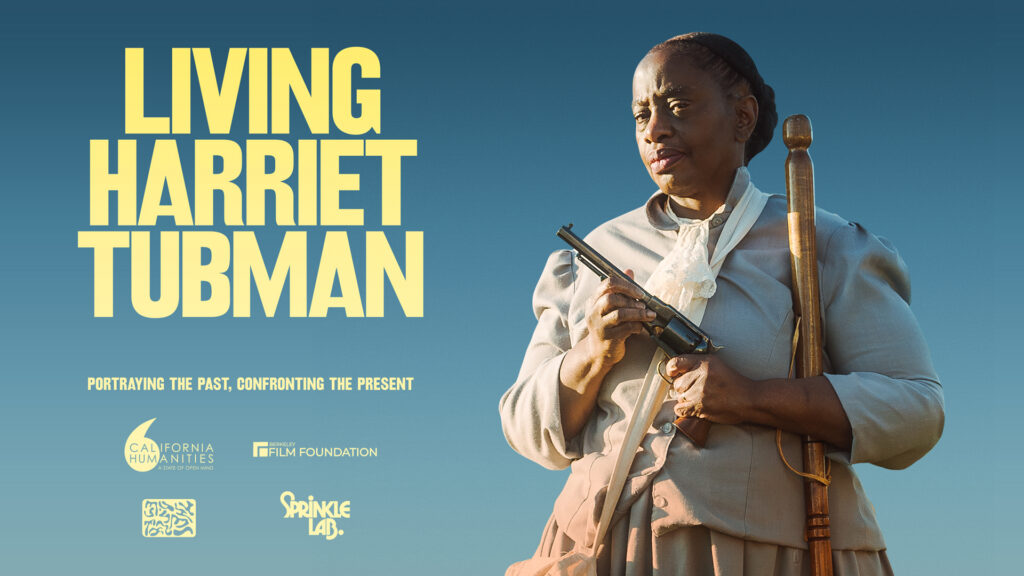
On February 20, the short documentary Living Harriet Tubman premiered at the historic Lincoln Theatre in Washington, D.C., as part of the 2026 Black History Film Festival. The film documents more than three decades of work by Fresno-based educator and Civil War reenactor Nancy Whittle, whose portrayal of Harriet Tubman has reached audiences across California.
For Whittle, reenactment is not costume or performance alone — it is scholarship in motion. Through research, public engagement, and educational programming, she brings Harriet Tubman into classrooms, museums, and community spaces, inviting audiences to encounter Tubman as a strategist, abolitionist, and moral leader whose decisions required extraordinary courage.
When students meet “Harriet Tubman” in person, history shifts from abstraction to encounter. Whittle’s work transforms textbook narratives into dialogue, asking participants to consider the risks Tubman took, the networks she built, and the enduring meaning of freedom.
The documentary follows Whittle as she reflects on a life spent reenacting and prepares a culminating performance that confronts the incomplete narratives often present in Civil War reenactments. The documentary captures not only Whittle’s performance, but the reactions of audiences who see themselves reflected in the story — and who leave with a deeper understanding of both the past and its contemporary relevance.
“We made this film during a time when the telling of American history feels especially fraught. Nancy’s work demonstrates that representing the past isn’t neutral; it requires courage and a willingness to confront uncomfortable truths.”
— Brandon Tauszik, Co-Director
Supported in part by California Humanities, Living Harriet Tubman engages questions central to the public humanities: Who tells history? How is it interpreted? What responsibilities come with representing the past?
In a time when historical narratives are increasingly contested, projects like this model interpretation are grounded in research, care, and community dialogue. They demonstrate how storytelling can open space for reflection rather than division.
The humanities are often associated with books and archives, but they are equally present in embodied storytelling. Through film and performance, Living Harriet Tubman illustrates how history remains dynamic — continually interpreted and reshaped by those committed to keeping its lessons alive.
Since 2003, California Humanities has invested in documentary film as a vital form of public humanities practice. For more than two decades, we have supported filmmakers who illuminate overlooked histories, elevate lived experience, and bring complex cultural narratives into public conversation. Documentary storytelling remains one of the most powerful ways to connect research, memory, and community dialogue. Living Harriet Tubman continues this commitment — demonstrating how film can deepen historical understanding while strengthening civic engagement.