
“Remember a time when you were made to feel different.”
With this opening question, Edward Tepporn, Executive Director of the Angel Island Immigration Station Foundation, invited our staff to begin the tour not as observers of history, but as participants reflecting on their own lived experiences. It was also an invitation to step into the experience of those who had passed through this place, not as distant figures in history, but as people whose struggles echo into the present.
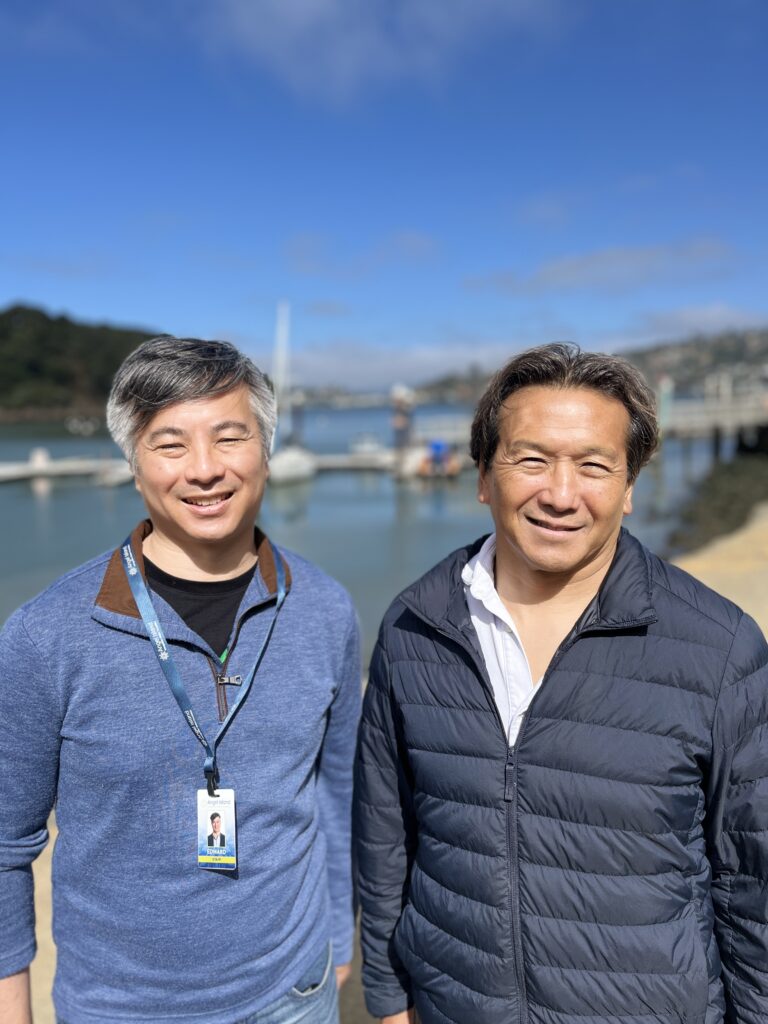
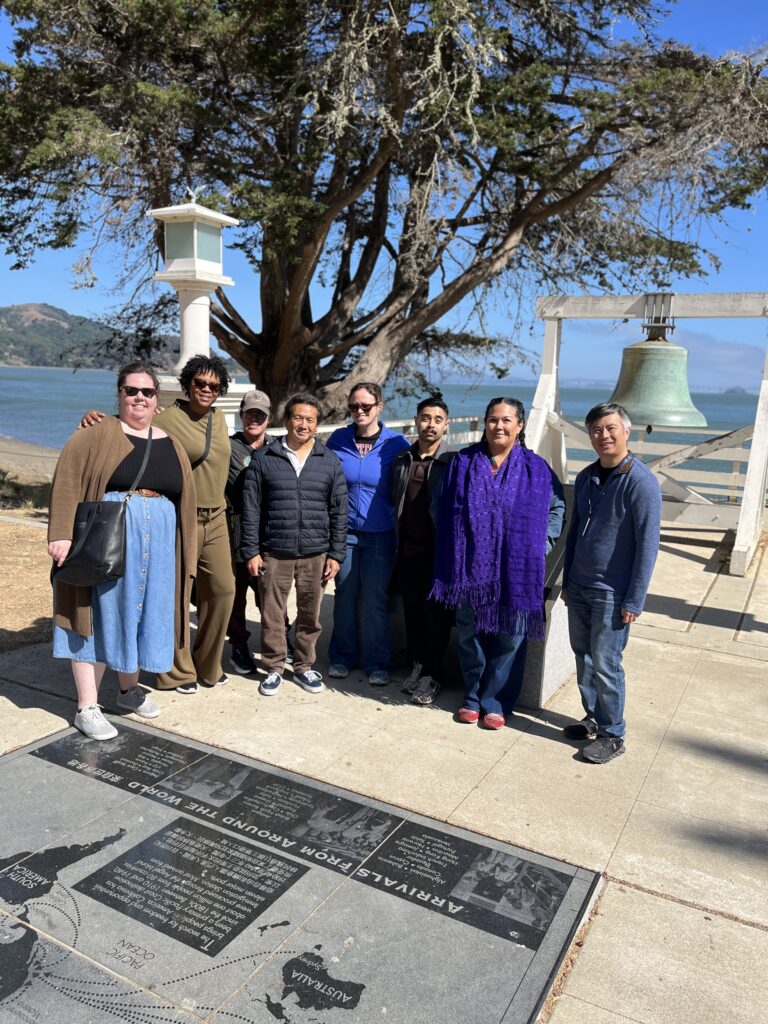
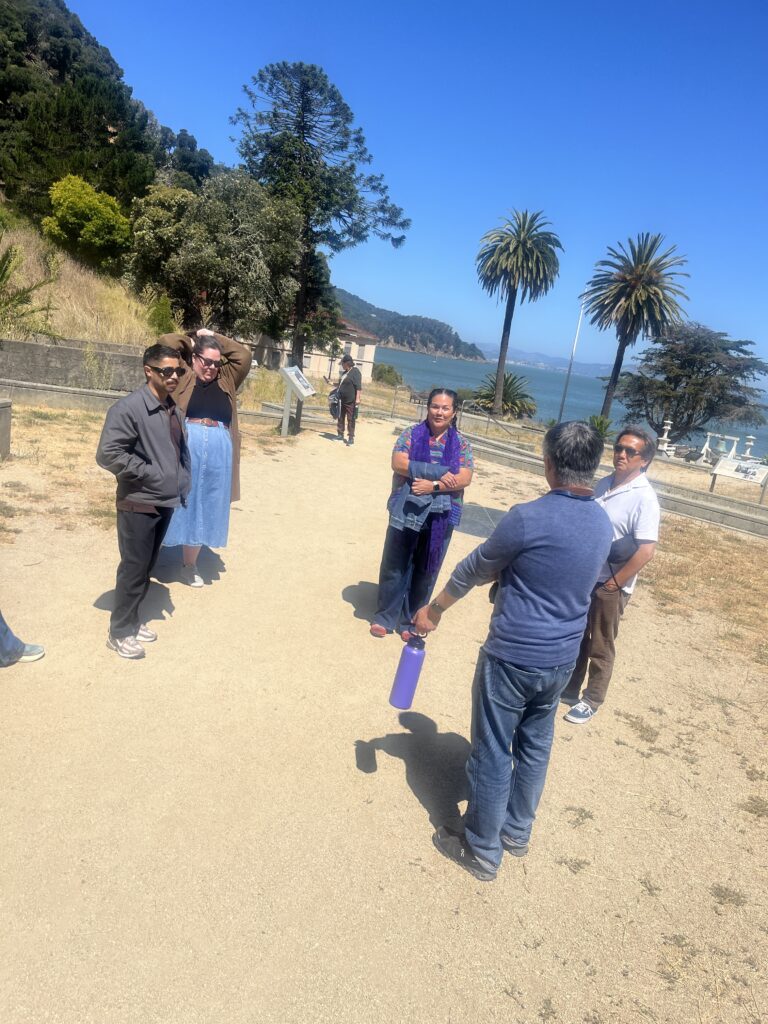
What followed was a powerful journey through Angel Island’s past. From 1910 to 1940, this Immigration Station on Miwok land processed—and often detained—immigrants, particularly from Asia. Far from the swift entry associated with Ellis Island, Angel Island was designed to exclude. Many arrived after a three‑week sea voyage only to face invasive medical exams, relentless interrogations, and long separations from family. Some were confined for weeks; others, like one young woman, endured nearly two years of detention.
The barracks themselves still carry the voices of those held inside. The detainees left behind poems carved into the wooden walls, bearing witness to their sorrow, resilience, and determination not to be forgotten.
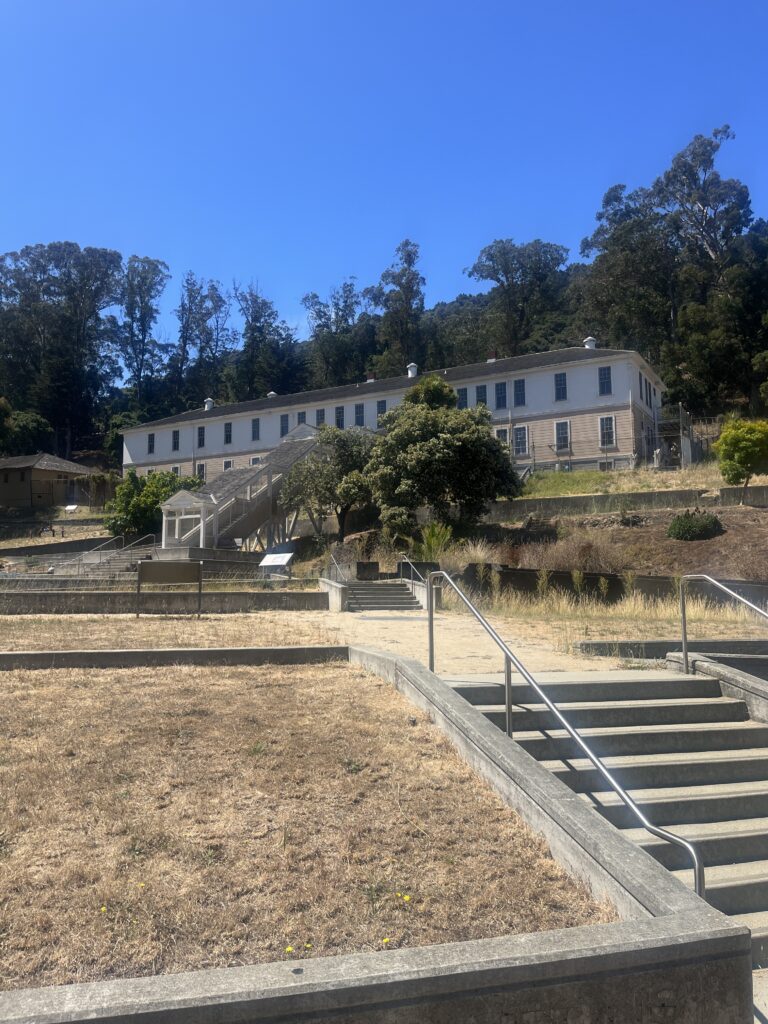
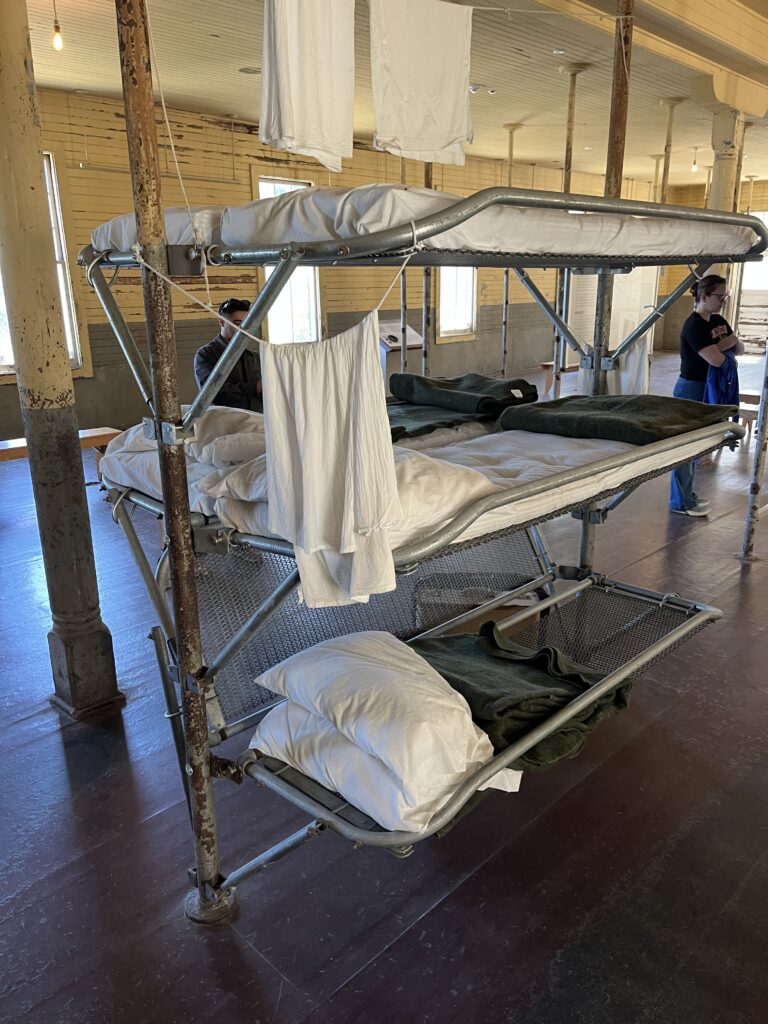
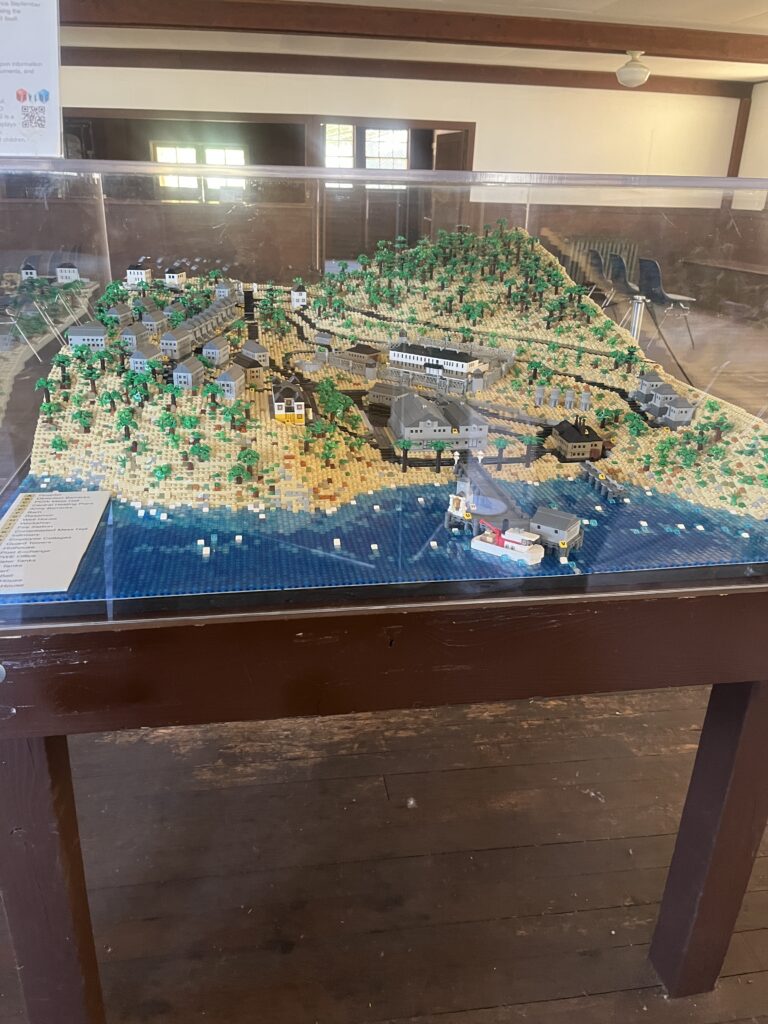
One poem by Yee of Taishan, titled Random Thoughts Deep at Night captured the haunting loneliness of those nights:
In the quiet of night, I heard, faintly, the whistling of wind.
The forms and shadows saddened me; upon seeing the landscape, I composed a poem.
The floating clouds, the fog, darken the sky.
The moon shines faintly as the insects chirp.
Grief and bitterness entwined are heaven sent.
The sad person sits alone, leaning by a window.
— Written by Yee of Taishan
Standing in that space, the air heavy with memory, the parallels to today were impossible to ignore. While the Chinese Exclusion Act of 1882 has long been repealed, echoes of its legacy remain. Then, Chinese immigrants were required to carry certificates of identity to prove they had the right to be here. Today, many immigrants still navigate daily life carrying passports, green cards, or birth certificates to verify they belong in America.
As the tour came to a close, Edward paused and asked a different question:
“Now, remember a time when you were made to feel welcomed and included.”
The room fell quiet. After walking through stories of exclusion and hardship, this invitation carried a new weight. It reminded us that while Angel Island bears witness to the pain of those denied belonging, it also calls us to consider how we can offer welcome today. The contrast was striking: the isolation carved into the barrack walls against the memory of times when we ourselves felt seen, accepted, and valued.
That shift—from exclusion to belonging—underscored the relevance of Angel Island not only as history, but as a living lesson, and it highlights the theory of change of California Humanities’ Strategic Framework, which aims toward multiracial democracy so that everyone feels a sense of belonging. It asks each of us to recognize the power we hold to either close the door or open it wider for someone else.
Our staff left with a renewed understanding that history is not only about the past, but it is also about the choices we make in the present. Angel Island reminds us that the ideals of freedom and inclusion must be actively upheld, because they are not guaranteed.
As we reflect on Edward’s final question, we are challenged to extend the joy of belonging to others: in our neighborhoods, in our workplaces, and in the communities we serve. Because while Angel Island tells a story of exclusion, its lessons call us to create a more welcoming future.
To learn more about the history of Angel Island and support the ongoing work of the Angel Island Immigration Station Foundation, visit www.aiisf.org.