Written by mariana Aq’ab’al’ moscoso
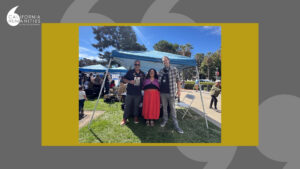
From April 14 to 16, I had the privilege of attending the Native Americans in Philanthropy (NAP) 2026 Annual Conference alongside my colleagues Shonda and Marika. I have been to many conferences over the course of my career in arts and culture — and I can say, without hesitation, that this was one of the best I have ever attended.
As a reconnecting Indigenous person of Achi Maya roots, I carry real insecurities about being in all-Native spaces. I want to name that honestly, because what I experienced at NAP made me almost entirely move away from that insecurity, and with such gentleness. The care built into the conference structure — thirty minutes between sessions, a dedicated wellness room, intentional pacing — signaled from the start that this gathering was designed for people, not just for productivity. And the joy was real too: I saw my colleagues play Rock, Paper, Scissors to break a three-way bingo tie — and I may or may not have won a shirt from Native Lands (by Dez, @indigenousland) after dancing down a runway. No regrets.
The conference sessions were thoughtful and substantive. I connected with members of my Two-Spirit and Indigiqueer community from the Bay Area and with people I had only known virtually or by name, including Nicole Myers-Lim (Pomo), a guest on Episode 5: Recognition, Rights, and the Space Between — Law & Policy Now of our podcast, Reclaiming Our Stories, and being in the same room with Nicole filled me with gratitude. The series is available on your favorite podcast streaming platform.
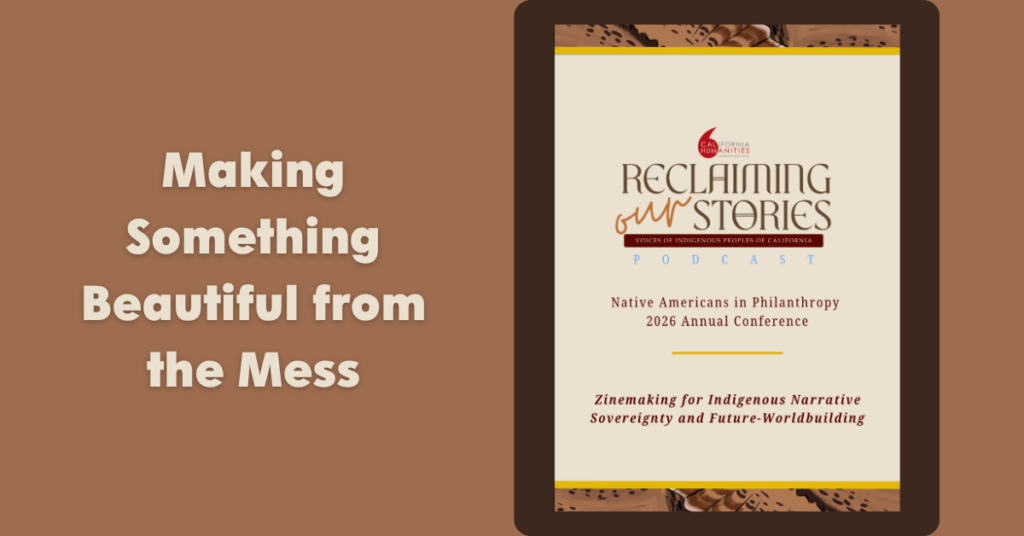
The moment I had been most looking forward to was facilitating our own session — Reclaiming Our Stories: Zinemaking for Indigenous Narrative Sovereignty and Future-Worldbuilding. In this experiential workshop, participants engaged with the podcast’s themes through collage-based zinemaking — an accessible, community-rooted art practice long used in organizing, youth culture, and creative work. Guided by prompts drawn from the series’ narrative arc — Who tells the story of this land? What truths are we reclaiming? What languages carry our futures? What kind of ancestor will I become? — participants worked on 5.5 x 8.5 inch pages that explored story, identity, land, and possibility.
No art experience was required. What was required was presence — hands, heart, and willingness to sit in the productive mess of making something from materials that already exist. By the end, we had 24 pages that together formed a collective Reclaiming Our Stories conference zine, reflecting many truths across many lands.
The closing reflections stayed with me. People shared pages about landscapes and ancestors, about abalone shells and burning sage, about Yosemite and flicker birds and the cyclical relationship between body and land. One participant wrote a blackout poem and read it aloud: there is a deep sense of loss — finding what adores — I want to show you where we’re hiding it. Another named her great-grandmother, her namesake. Another said her page was about reclaiming the right to ceremony.
But the reflection I keep returning to came from Diane Pebeahsy (Yakama/Comanche), a Peacekeeper from Toppenish, Washington, who said simply: “I feel good that we made something beautiful from the mess.”
That is the work. That is the invitation the podcast extends, and that is what I hope we carry forward from NAP — not just the connections made, but the reminder that beauty and truth can be built together, even from the unruly, imperfect, generative mess of this moment, and be present with one another.
Reclaiming Our Stories is streaming on your favorite podcast platform. We hope you’ll listen.