Across California and the West Coast, libraries continue to serve as some of the most vital spaces for connection — places where stories are not only preserved, but shared, discussed, and brought to life.
As we recognize National Library Week, we’re reminded that libraries are more than institutions. They are community anchors — welcoming people across generations, backgrounds, and experiences to engage with ideas and with one another.
At California Humanities, this belief is central to our work.
Through programs like the Library Innovation Lab (LIL), we’ve seen how libraries create meaningful opportunities for dialogue — especially in communities navigating cultural identity, migration, and belonging.
Libraries offer something increasingly rare: space to slow down, listen, and reflect. They are where the humanities live in practice — through conversation, storytelling, and shared understanding.
Through the course of this project, my goal is to strengthen relationships with the people around me and work together to develop programs that make them feel welcome at the library. I’ve heard from people who are under stress and looking for outlets, and I hope to co-create programs or services that address this need. I see the Library Innovation Lab helping me create lasting connections with our immigrant families, whether through these programs or others, which will enable us to collaborate in building stronger, more resilient communities.
— Amy Yang, Children’s Services Librarian, Newark Library
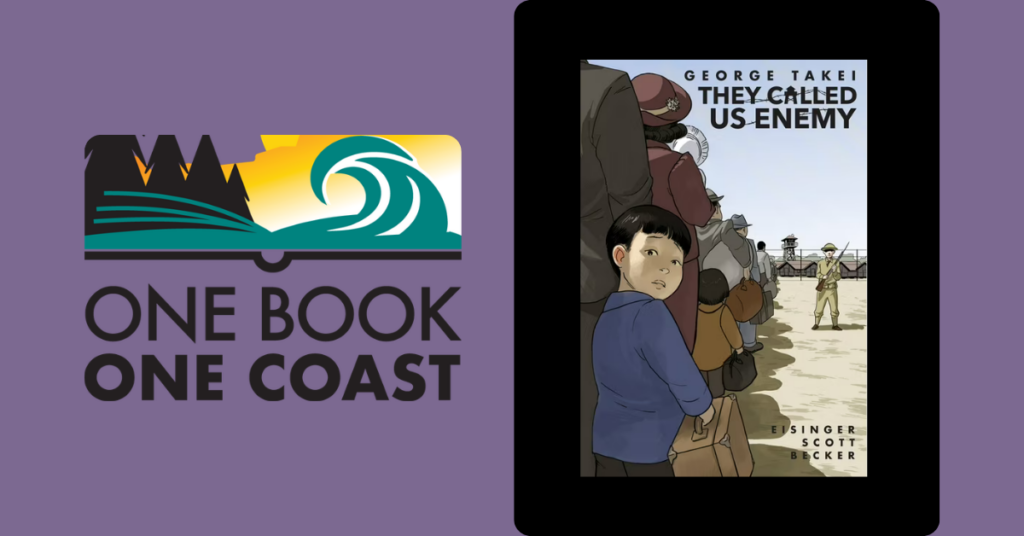
This spring, that spirit of connection is unfolding across the region through One Book, One Coast, which brings together more than 190 libraries in California, Washington, and Oregon.
Centered on They Called Us Enemy by George Takei, the initiative invites thousands of readers into a shared exploration of history, memory, and justice.
We’re especially excited to see the LA County Library and former California Humanities board member Dr. Skye Patrick, Director of LA County Library, initiating and leading this effort — demonstrating how libraries can activate large-scale, meaningful public engagement through story.
At its core, One Book, One Coast reflects what libraries do best: bringing people together around a shared experience and creating space for reflection, dialogue, and deeper understanding.
As part of this initiative, we spoke with public historian Kristen Hayashi, Ph.D Director of Collections Management & Access and Curator at the Japanese American National Museum, to explore how personal narratives — particularly those told through the eyes of children — shape our understanding of history.
Her reflections underscore the importance of preserving lived experience, not just as a record, but as a pathway to empathy.
Watch the conversation:
Libraries are one of the few spaces where people can come together — freely and openly — to engage with stories, ideas, and one another.
From local programming to regional initiatives like One Book, One Coast, this work reflects a shared purpose: creating opportunities for connection across difference.
Because when we engage with stories — especially those different from our own — we expand what’s possible for empathy, understanding, and community.
This is What We Share: Culture. Community. California — Connection.